30 Educational Games That Improve Math Skills (My Top Picks For Kids & Adults)
My Favorite Educational Games That Improve Math Skills
I’ve always believed math doesn’t have to feel boring or stressful. Over the years, I’ve found that educational games that improve math skillscan make learning numbers a lot more fun.
Instead of sitting with worksheets, kids, teens, and even adults can play, solve puzzles, and enjoy math in a whole new way. In this list, I’m sharing some of my favorite math games ones that turn problem-solving into play and help build real confidence with numbers.
1. Math Bingo (Ages 6-12)
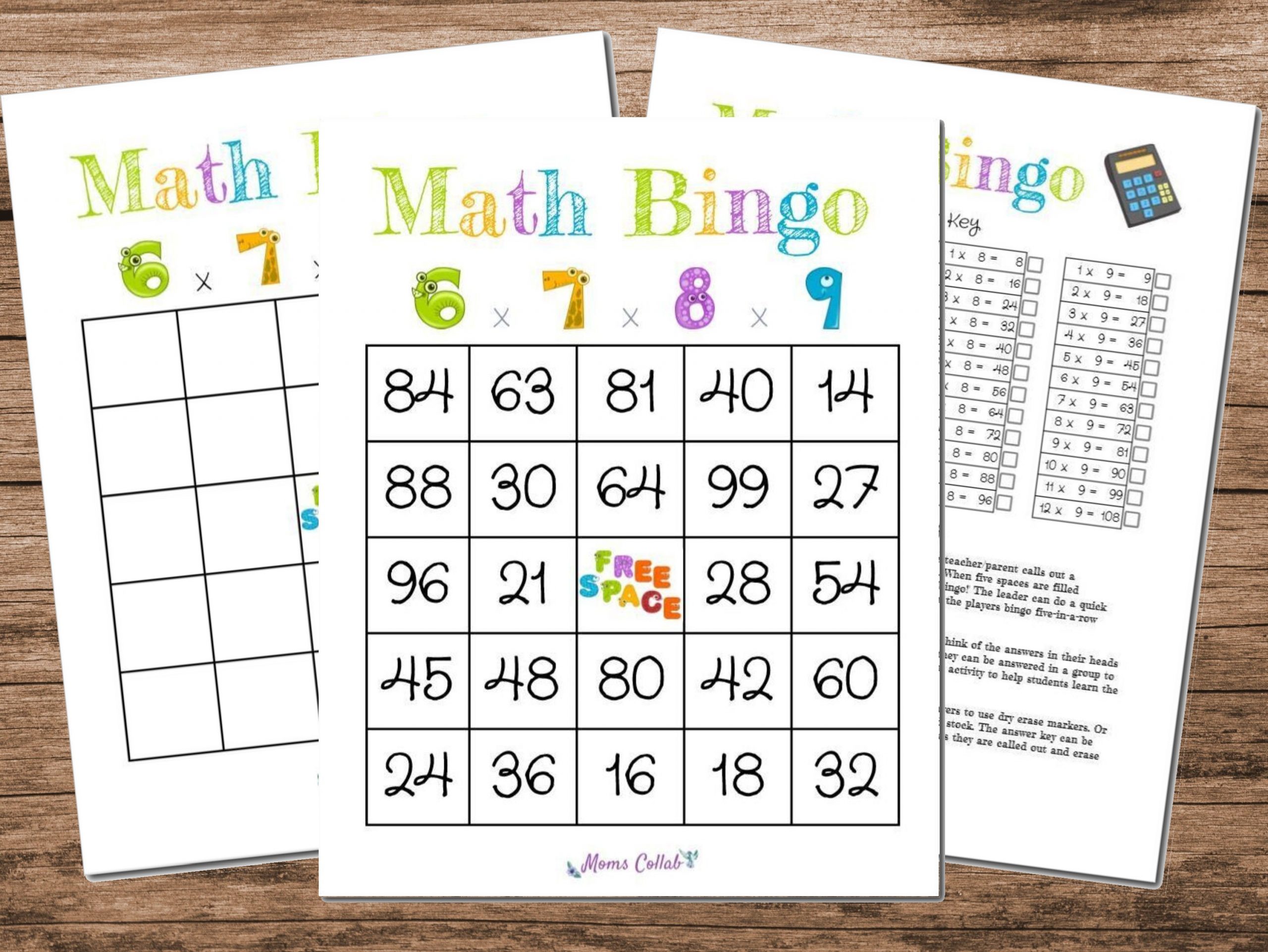
I’ve always loved playing Bingo, but when I tried Math Bingo, it felt even more exciting. Instead of just waiting for numbers to be called, you solve math problems to mark your card. For example, if the problem is “7 + 5” and the answer is 12, you look for the number 12 on your card and mark it. The game can be played with addition, subtraction, multiplication, or division, so it works for learners at different levels.
What I enjoy most is the energy it creates in a group. Everyone is focused, rushing to solve problems, and hoping to be the first to shout “Bingo!” It’s competitive, but in a fun way. I’ve played this with kids and adults, and no matter the age, the excitement spreads quickly. For anyone who wants to practice math even more, especially with multiplication, I recommend tablasde-multiplicar.net. It’s a great resource full of games, tables, and exercises that make learning numbers easier and more fun.
2. Sum Swamp (Digital Version, Ages 5-8)
When I first played Sum Swamp, I could see right away why kids love it. It’s a colorful board game where you roll dice, solve simple math problems, and move your piece through a swamp full of twists and turns. The problems usually involve basic addition and subtraction, which makes it perfect for younger children who are just starting to get comfortable with numbers.
The fun part is the theme crossing bridges, dodging swamp creatures, and racing to the finish. It doesn’t feel like “serious math practice,” but kids end up solving a lot of equations without even realizing it. I like how it makes learning math feel like an adventure instead of a lesson.
3. Prime Climb (Ages 10+)
One of the smartest and most colorful math games I’ve ever played is Prime Climb. The board is filled with numbers in different colors, and the goal is to move your pieces around by using multiplication, division, and prime numbers. At first, I thought it might be too complicated for kids, but once I started playing, I realized how easy and fun it actually is.
The beauty of this game is that it works for different ages. Kids learn about factors and primes visually, while adults can enjoy the strategy and challenge. It’s one of those interactive learning gamesthat doesn’t feel like studying at all, yet you end up understanding math concepts on a deeper level. Every time I play, I notice how it sparks conversations about numbers and patterns that I wouldn’t have thought about otherwise.
4. Math Dice (Ages 8+)
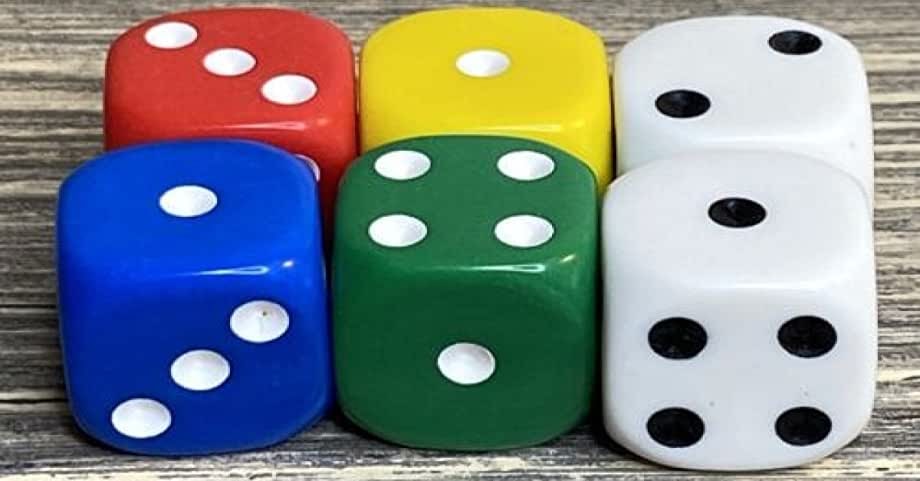
Math Dice is one of those simple games that gets surprisingly addictive. You roll a few dice, and then you have to use addition, subtraction, multiplication, or division to reach a target number. For example, if the target number is 24, and you roll numbers like 6, 2, and 4, you might think of solving it with “6 × 4” or “(2 + 4) × 4.”
I love how it pushes me to think in creative ways. There’s usually more than one solution, so it’s fun to see how different people solve the same problem. I’ve noticed that even kids who don’t usually enjoy math feel proud when they find a clever way to hit the target number.
5. Equate (Ages 8+)
When I first heard people describe Equate as “Scrabble for math,” I was curious. After playing it, I realized that’s exactly what it is. Instead of building words, you build equations on the board using numbers and math symbols. You might place something like “4 + 5 = 9,” and then another player might add to it with multiplication or division.
It’s such a great way to practice algebra and problem-solving because you have to make sure every equation you build is correct. I like how it makes math feel more like a puzzle than a chore. Every time I play, I notice myself paying closer attention to how numbers connect to each other.
6. Prodigy Math Game (Grades 1-8)
I’ve seen kids who usually avoid math sit for hours playing Prodigy. It’s an online RPG-style game where you battle characters by solving math problems. Instead of just answering questions on a worksheet, you get rewarded with points, new outfits, and fun adventures.
What I find amazing is how it motivates kids who don’t normally like math. They forget they’re practicing because the game feels like an adventure. I’ve watched learners who struggled with focus stay completely engaged just to win their next battle. That’s the kind of math practice that doesn’t feel like work.
7. CoolMath Games (Ages 7+)
Whenever I want to mix fun with problem-solving, I go to CoolMath Games. It’s a website full of free games that involve logic, puzzles, and math challenges. Some games are simple, like solving quick equations, while others are more about strategy and problem-solving.
The best part is that it’s not just for kids. I’ve played plenty of their games myself, and I still find them challenging and fun. It’s a great way to keep your brain sharp while enjoying a break from regular study or work.
8. Khan Academy Kids Math Games (Ages 2-8)
For younger learners, I always recommend Khan Academy Kids. It’s a free app filled with colorful, interactive math activities that guide kids step by step. The app adapts to each child’s level, so no one feels left behind or too far ahead.
I really like how friendly and supportive it feels. The animations and characters keep kids interested, while the lessons build real skills. It’s not just random math practice it’s structured learning wrapped in fun games.
9. Reflex Math (Grades 2-8 / Ages 7-14)
When I first tried Reflex Math, I was surprised at how fast-paced it was. The game focuses on multiplication and division, and you have to answer quickly to move ahead. It feels like a video game, with rewards and progress tracking, but every step is tied to practicing math fluency.
The speed of the game makes it exciting. Kids don’t even notice they’re drilling math facts because they’re so focused on beating their score. I like how it builds confidence in solving equations quickly, which helps a lot in school tests.
10. Math Blaster (Ages 6-12)
Math Blaster has been around for years, and I still think it’s one of the best math games out there. It’s set in outer space, where you go on missions and solve math problems to keep moving forward. The challenges might involve addition, subtraction, multiplication, or even fractions, depending on the level.
What I love most is how immersive it feels. You’re not just solving random problems; you’re part of a mission to save the galaxy. That sense of adventure keeps kids engaged, and before they know it, they’ve practiced dozens of math problems without feeling bored.
11. Card Deck Math (Ages 6-12)
I’ve always found that a plain deck of cards can turn into one of the most flexible math tools. You can play “war,” but instead of the highest card winning, players compare sums, products, or even fractions. For example, if I draw a 7 and you draw a 4, we can both multiply them and compare answers. It feels like a fun card game, but secretly it’s a math lesson.
What I love about card deck math is how adaptable it is. Younger kids can stick with addition and subtraction, while older kids can move into fractions or even probability. Best of all, it’s cheap, portable, and easy to set up anywhere at home, in class, or even during a family road trip.
12. Fraction Pizza (Ages 7-12)
Fractions used to feel abstract to me until I discovered this game. Imagine making paper pizzas, cutting them into slices, and then asking kids to “serve” half a pizza or three-fourths of one. Suddenly, fractions are no longer numbers on a page they’re food you can see and share.
I like how Fraction Pizza makes learning hands-on and relatable. Kids understand that two-eighths is the same as one-fourth when they physically put the slices together. It’s such a simple but powerful way to make fractions less intimidating and a lot more fun.
13. Dice Wars (Ages 6-12)
Dice games always bring a spark of excitement, and Dice Wars is one of my favorites. Two players roll dice at the same time, and the challenge is to add, subtract, or multiply their rolls to see who gets the higher result. It’s quick, competitive, and full of laughter.
What makes Dice Wars special is how easy it is to adjust the difficulty. For younger kids, you can stick to basic sums. For older learners, you can add fractions or even multi-dice challenges. I’ve used it to sneak in practice without kids even realizing they’re doing math.
14. Math Jeopardy (Ages 9+)
This one always gets a classroom buzzing with excitement. Just like the TV show, kids pick categories, solve math problems, and earn points for their team. I’ve used it for test prep, and students get so competitive that they forget they’re reviewing material.
I enjoy Math Jeopardy because it works for any grade level. You can create categories like “Fractions,” “Word Problems,” or “Geometry,” and adjust the difficulty as needed. It turns serious review sessions into a game that students actually look forward to.
15. Escape Room Math Challenges (Ages 10+)
Nothing grabs attention like a math escape room. Players solve puzzles, crack codes, and work together to “escape” within a time limit. I’ve seen students get completely absorbed in the story and forget that every step involves math.
The best part about escape room math is the teamwork it inspires. Whether it’s solving equations to open a lock or figuring out a sequence to get the next clue, kids stay engaged because they feel like detectives. It’s a brilliant mix of fun and problem-solving.
16. Sudoku (Ages 8+)
Sudoku doesn’t look like math at first glance, but it’s a fantastic logic puzzle. You fill in a grid with numbers so that no row, column, or box repeats the same digit. I love how it builds reasoning skills without feeling like schoolwork.
What makes Sudoku useful for math learners is the critical thinking behind it. You’re constantly analyzing patterns, eliminating possibilities, and testing ideas skills that apply directly to math problem-solving. I often use it as a “brain break” that still sharpens thinking.
17. KenKen (Ages 9+)
KenKen takes Sudoku to the next level. Instead of just placing numbers, you also have to follow math operations like addition, subtraction, multiplication, or division inside little boxes. I’ve used it with middle schoolers, and it’s always a hit.
The challenge is balancing logic with arithmetic. For example, if a box says “12×” and has three cells, you know the numbers must multiply to 12, but you still need to fit them into the overall grid. It’s tricky, engaging, and builds both number sense and strategy.
18. 24 Game (Ages 8+)
This is one of the fastest-paced math games I know. You get four numbers and need to use operations, addition, subtraction, multiplication, or division to make 24. It sounds simple, but I’ve seen even adults get stumped sometimes.
I like it because it pushes creativity. There’s usually more than one way to reach the target, so players think outside the box. It’s a great game for sharpening mental math and encouraging quick problem-solving under pressure.
19. Math Crosswords (Ages 9-14)
I’ve always enjoyed crosswords, but when you replace word clues with math problems, it becomes a powerful review tool. Imagine a grid where “4 across” isn’t a definition but something like “12 ÷ 3.” It’s a fun twist that gets students solving without realizing it.
Math crosswords are especially helpful for practicing vocabulary too. You can mix in terms like “denominator” or “quotient,” so kids get used to connecting math language with actual problems. It’s like sneaking in a double lesson skills and words at once.
20. Kakuro (Ages 10+)
Kakuro feels like a cross between Sudoku and a crossword, but with sums. Each row or column has a target number, and you have to fill in digits that add up correctly without repeating. At first, it looks tricky, but once you get the hang of it, it’s addictive. I like Kakuro because it builds strong arithmetic fluency.
You’re constantly testing combinations of numbers in your head, which sharpens addition and subtraction skills. It’s challenging, but the satisfaction of filling in a correct sequence makes it worth it.
21. Number Hopscotch (Ages 4-8)
When I play Number Hopscotch with kids, it feels like regular hopscotch but with a fun math twist. I write numbers inside the squares and call out a problem like “4 + 3.” The child then has to hop to the square with the answer. This way, kids are moving their bodies while solving problems in their heads.
What I love about this game is how it mixes physical activity with learning. Kids don’t even realize they’re practicing math because they’re too busy jumping, laughing, and having fun. It’s perfect for younger learners who find it hard to sit still during lessons.
22. Count And Catch (Ages 3-7)
Count and Catch is a game I use to keep math light and playful. We toss a ball back and forth while counting in sequence sometimes by ones, other times by twos, fives, or tens. If someone drops the ball, we start again, which keeps everyone focused and engaged.
I’ve found that this simple game really builds number fluency. Kids stay active, and the counting feels natural because it’s part of the movement. It’s also a great way to sneak in practice for skip-counting, which later helps with multiplication.
23. Monster Math (Ages 5-10)
Monster Math is one of those apps kids absolutely love. They get to help little monsters on their adventures by solving math problems. Each correct answer pushes the story forward, and the animations are bright, colorful, and full of energy.
I like how the game adjusts to the child’s level, so it always feels challenging but never frustrating. Kids feel like they’re playing a video game, but they’re actually practicing addition, subtraction, multiplication, and division without noticing it.

24. Math Ducklings Race (Ages 4-8)
In Math Ducklings Race, I’ve seen kids get so excited watching their little ducklings waddle forward every time they solve a problem correctly. It’s simple, but the race element makes it competitive and fun. The cuteness of the ducklings also makes the game feel lighthearted and stress-free.
I like using this game for quick math drills. Instead of boring worksheets, kids get motivated because they want their duckling to win the race. It works well for younger students, especially when practicing speed with basic operations.
25. Shape Sorter Games (Ages 2-6)
Shape Sorter Games remind me of the classic toys where kids match blocks into the right holes, but you can adapt them for learning geometry. I’ve used paper cutouts, cards, or even household objects to let kids group shapes by type, sides, or angles.
This hands-on approach makes geometry less abstract. Kids understand what a square or triangle really means by handling and sorting them. It builds strong spatial reasoning and lays a foundation for future geometry lessons.
26. DragonBox Algebra (Ages 5-15)
DragonBox Algebra is one of my favorite tools for introducing algebra. It turns what usually feels like a hard subject into a fun puzzle game. Kids drag and drop shapes and numbers to balance equations, and over time, the puzzles slowly turn into real algebra problems.
I love how visual it is. Instead of staring at confusing symbols, kids see math as pictures and patterns. It’s a game I’ve seen work well, not just for kids but even for adults who want to brush up on their algebra skills in a stress-free way.
27. Mathland (Ages 7-12)
Mathland feels like stepping into a math adventure story. Players go on quests, solve puzzles, and unlock progress by answering math problems. The game world is colorful and full of challenges, so it feels more like playing an adventure game than studying.
I find this game especially good for kids who love stories. The math doesn’t feel forced it blends naturally into the gameplay. Every new level feels like a reward, which keeps learners motivated to keep practicing.
28. Lumosity Math Challenges (Teens & Adults, 13+)
I’ve used Lumosity myself, and it’s a great app for keeping the brain sharp. It offers quick math challenges along with memory and logic puzzles. The games are short but engaging, making it easy to fit into a busy schedule.
What I like most is how it tracks progress and adjusts difficulty as you improve. Teens and adults often enjoy it because it feels like personal brain training rather than schoolwork. It’s a perfect way to exercise mental speed and focus.
29. Math Scavenger Hunt (Ages 8-14)
Hide math problems around the room or school. Students work in teams to find and solve problems, with each correct answer leading to the next clue. The final clue leads to a small prize or celebration.
I create hunts that review specific units or combine multiple skills. The movement and collaboration make it memorable, and students often request repeat hunts with different problems.

30. BrainPOP Math Games (Ages 8-14)
BrainPOP has always been fun to use because of its humor and animations. The math games on their site mix learning with entertaining characters and interactive play. Teens especially enjoy it because it doesn’t feel like a classroom exercise.
I find these games helpful when introducing or reviewing topics. The mix of videos, quizzes, and games keeps learning fresh and lighthearted, which is great for students who might get bored with traditional lessons.
People Also Ask
How Often Should Kids Play Math Games?
Even 10-15 minutes a day can make a big difference. The goal is to keep practice consistent without making it feel like extra homework.
Do Adults Also Benefit From Math Games?
Absolutely. Games like Sudoku, Lumosity, and Elevate are perfect for adults who want to keep their brains sharp and improve mental math skills.
How To Teach Mathematics In A Fun Way?
- Use games and puzzles
- Use real-world examples
- Make it relevant to students' lives
- Use a variety of teaching methods
- Personalizing the learning experience for every student
- Integrating technology into math classrooms
Are Digital Math Games Better Than Physical Games For Learning?
Both have unique advantages that make them valuable for different situations. Digital games provide immediate feedback, adaptive difficulty, and detailed progress tracking. Physical games develop fine motor skills, social interaction, and conceptual understanding through manipulation.
Final Thoughts
Using educational games that improve math skills has been one of the best ways to make learning enjoyable. I’ve seen how these games turn tough concepts into fun challenges, and they keep both kids and adults engaged for hours.
These activities show that math doesn’t have to feel scary or boring. With the right mix of play and problem-solving, anyone can grow more confident with numbers. I truly believe that a little fun goes a long way in helping us build stronger math skills while enjoying the process.
You Might Also Like: 20 Best Free Spy Games To Play Online Now